
ACE Alzheimer Center is one of the 13 clinical partners performing the pilot studies within the COMFORTage framework. ACE is an organisation dedicated to tackling Alzheimer’s disease and other dementias through a comprehensive approach: diagnosis, treatment, research and training. It has a reference Diagnostic Unit and a Day Unit specialising in the day-to-day support of people with dementia. On the research side, it holds Europe’s largest Alzheimer’s genetic collection and leads numerous clinical trials in genomics, biomarkers and imaging, as well as driving awareness and outreach programmes aimed at the general public and families.
What is ACE’s role within the project?
Together with the other partners, ACE works towards the project’s objectives: predicting, monitoring and providing personalised recommendations for the prevention and management of dementia and frailty. To this end, as a clinical centre, it has two distinct strands of work: one retrospective and one prospective.
The retrospective strand is what makes ACE a key piece in the project’s technological development. ACE contributes to the consortium its dataset comprising more than 24,000 records of multimodal longitudinal data —genetics, biomarkers, MRI, neurological and neuropsychological assessments— shared in full, for the first time, with COMFORTage. This data is not simply a historical archive: it is the main fuel used to train and validate the project’s predictive algorithms, helping to build robust prediction models.
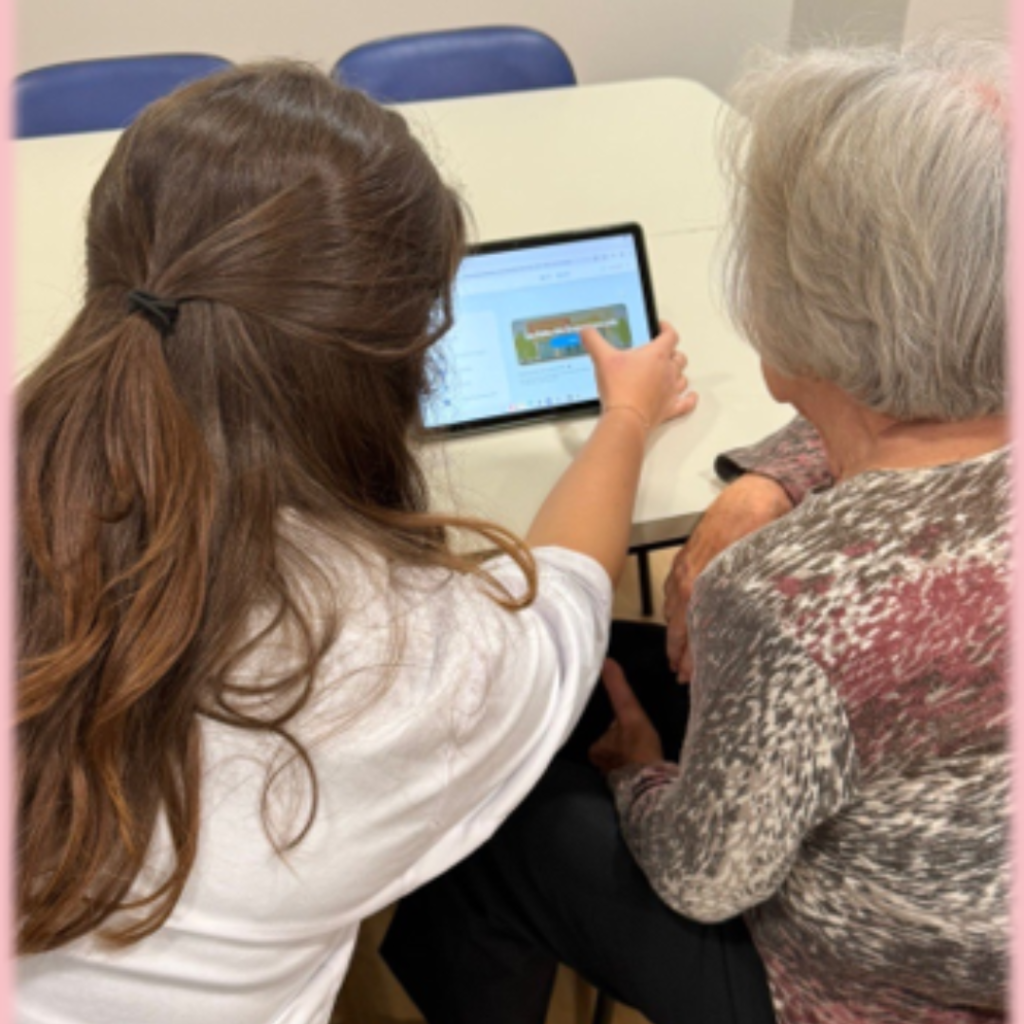
In addition, ACE is responsible for Pilot 3, a clinical trial that aims to test whether the use of digital tools developed within COMFORTage can help maintain memory, language and cognitive status in people with Mild Cognitive Impairment (MCI) or early-stage Alzheimer’s disease. The tools are based on providing cognitive stimulation activities, as well as collecting general health data, and portals offering participants information and advice on healthy living.
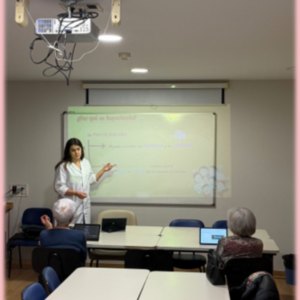
Participants to this pilot are patients from the centre who have been characterized and are being followed up regularly, who are divided into two groups. Those in the intervention group attend weekly 90-minute sessions of digital cognitive stimulation, supervised by a neuropsychologist who helps them get to grips with this technology and encourages them to use it independently at home for the rest of the week. Those in the control group do not attend in-person sessions, but receive the same extensive medical follow-up as the rest of the participants, which will later allow both groups to be compared.
This way, every session and every follow-up visit not only directly benefits the participant, but also will act as a layer of ongoing validation and enrichment, as well as providing an environment for healthcare professionals to try out the digital solutions in real-world situations. Added to this is the organisation’s own multidisciplinary approach, which brings an already structured, real-world clinical context to that data.
What this pilot is expected to deliver
This database and this integrated clinical approach allow the project to work towards three specific outcomes:
- Predictive models and clustering algorithms: an artificial intelligence system that cross-references biobank data to predict how the disease will progress in each patient, integrating genetic, biological, imaging and speech information, with the capacity to extrapolate these predictions to other similar populations.
- Technical reference document on data infrastructure: a piece of work to optimise the structure of clinical data so that different European hospitals can share it with one another in a way that is compatible and safe for patients. The ambition is for this method to be adopted as an official standard, contributing to the European framework for health data management.
- Communication guidelines and adaptation of the digital intervention: a framework of good clinical practice for tailoring care to each patient’s needs, designed to be transferred to other memory clinics and adopted by clinics and similar organizations as a basis for patient stratification in clinical trials.
Why does this matter?
Dementia has no cure, and current treatments remain limited. Today, prevention and early intervention are the most powerful tools we have. For this to work at scale, clinicians need better tools to identify who is at risk, and when a person’s cognitive state is likely to worsen, in order to to act with personalised, evidence-based strategies before the decline becomes irreversible.
The project also strengthens efforts to reduce the digital divide affecting older people and those living with cognitive impairment, by developing applications designed specifically for their needs and abilities.
COMFORTage, and ACE’s contribution to it, is a step towards that future. A future in which a patient’s complete biological, cognitive and social profile informs a tailor-made care plan. And one in which the learnings from a single memory clinic can strengthen the whole field across Europe.
**Article written by Ace Alzheimer Center Barcelona, a key partner in the COMFORTage project.