Scaling Integrated, User-Centred Care Across Europe: Building the workforce and ecosystems for sustainable health transformation
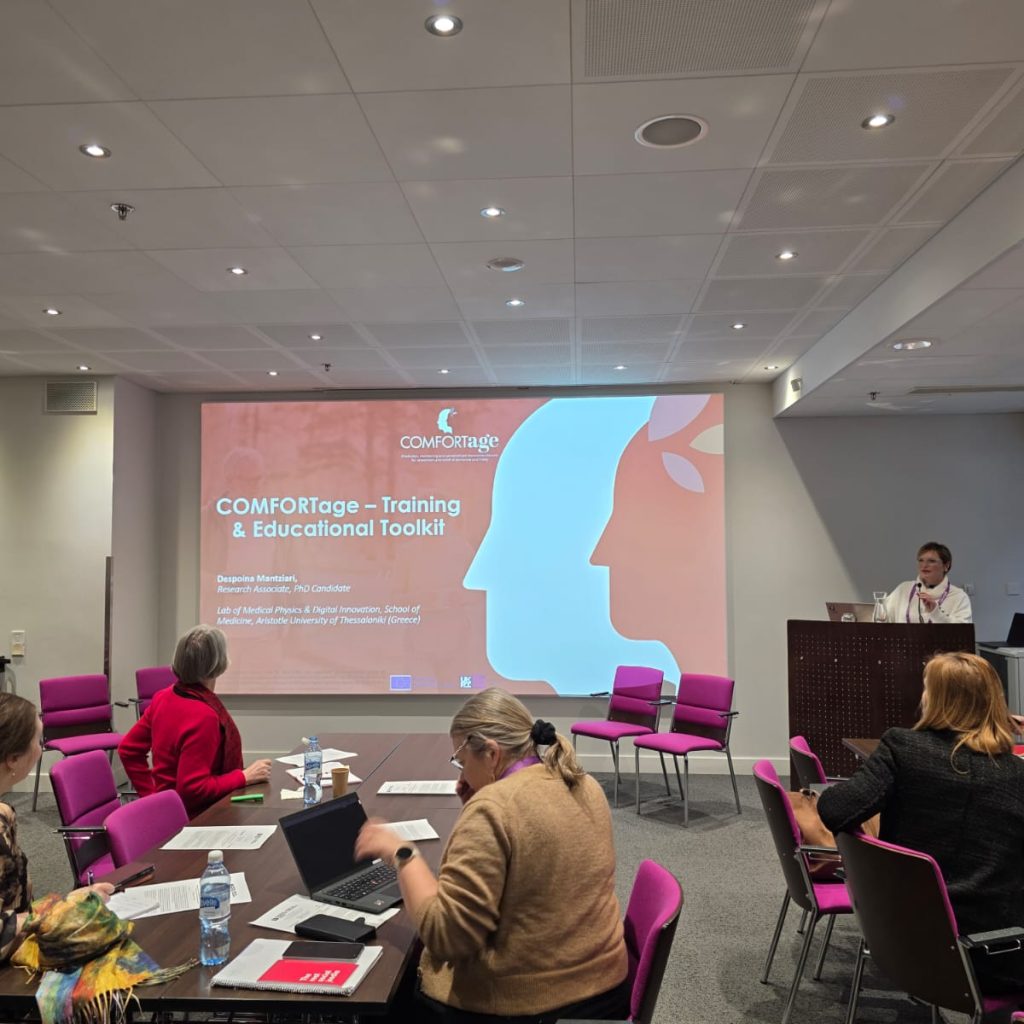
On 20 January 2026, the Radical Health Festival in Helsinki hosted the session “Digital Transformation in Action – Enabling user-centered care through inter-professional interventions”, bringing together policymakers, practitioners, researchers and innovation leaders from across Europe. Organised by Reference Site Collaborative Network – RSCN within the framework of the TEAMCARE project and with the active contribution of COMFORTage, the session explored how interprofessional training and collaborative ecosystems can drive sustainable digital transformation in health and care systems.
At the heart of the discussion was a shared challenge: how to move beyond promising pilots and embed integrated, person-centred care into routine practice. Speakers highlighted that digital innovation alone is not enough. Instead, transformation depends on a skilled and aligned workforce, supported by governance, interoperability and continuous learning.
Training as a cornerstone for integrated care
The session opened with insights into the TEAMCARE training model, presented by representatives from the Royal College of Surgeons in Ireland, Aristotle University of Thessaloniki and the RSCN. The TEAMCARE curriculum was showcased as a flexible, competency-based approach designed to strengthen transversal and digital skills across professions. Through microcredentials and adaptable learning pathways, the model supports interprofessional collaboration while allowing regional and organisational tailoring.
In parallel, COMFORTage was presented as a pan-European initiative addressing digital transformation in dementia and frailty care. With pilots running across multiple countries, COMFORTage combines AI-supported tools, modular training and strong ethical and regulatory alignment, demonstrating how digital solutions can be integrated into complex care pathways while keeping users at the centre.
Evidence from pilots and innovation ecosystems
Round Table 1 provided concrete evidence from early TEAMCARE pilots in UniGe Italy, UMED Poland, HMU Greece and RCSI Ireland. Speakers shared how the curriculum was adapted to local contexts and how it addressed key skills gaps, particularly in digital literacy, teamwork and collaborative decision-making. These early results reinforced the scalability of the model within higher education and continuing professional development frameworks.
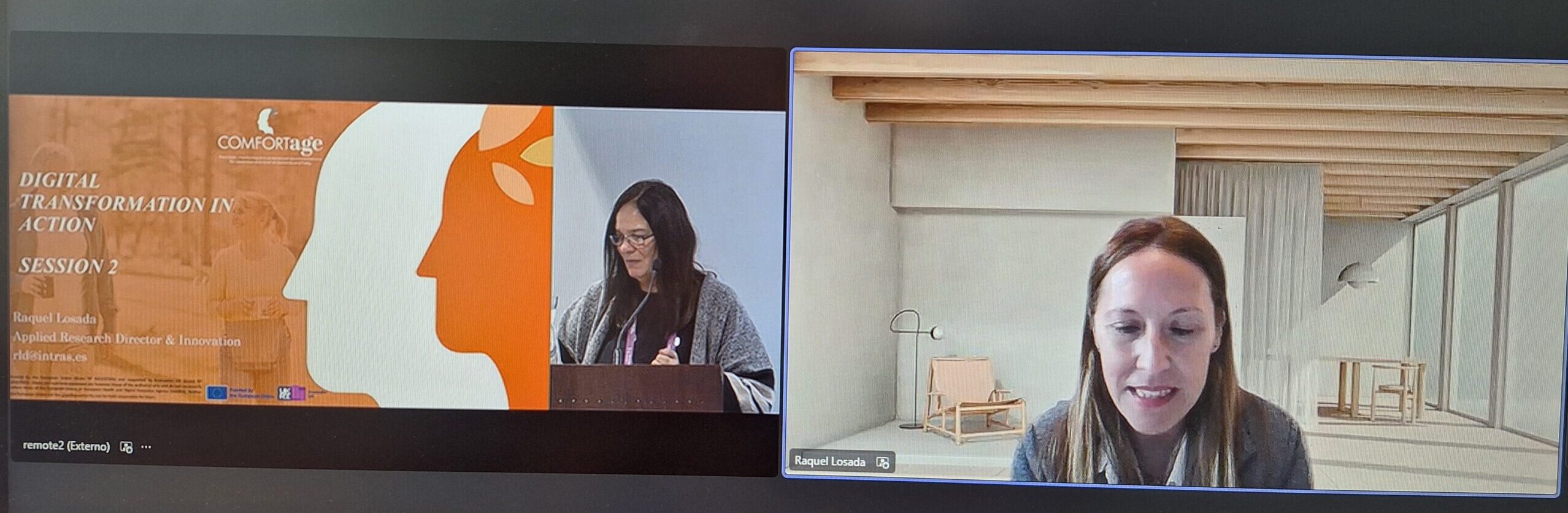
Session 2 shifted the focus to innovation ecosystems, with perspectives from COMFORTage, NHS Scotland and the Region of Crete. Speakers emphasised that scale-up requires coordinated action across academia, government, industry, civil society and end users. Interoperability, digital health literacy and ongoing professional training were identified as critical enablers, alongside leadership and evidence-based decision-making.
From knowledge exchange to collective action
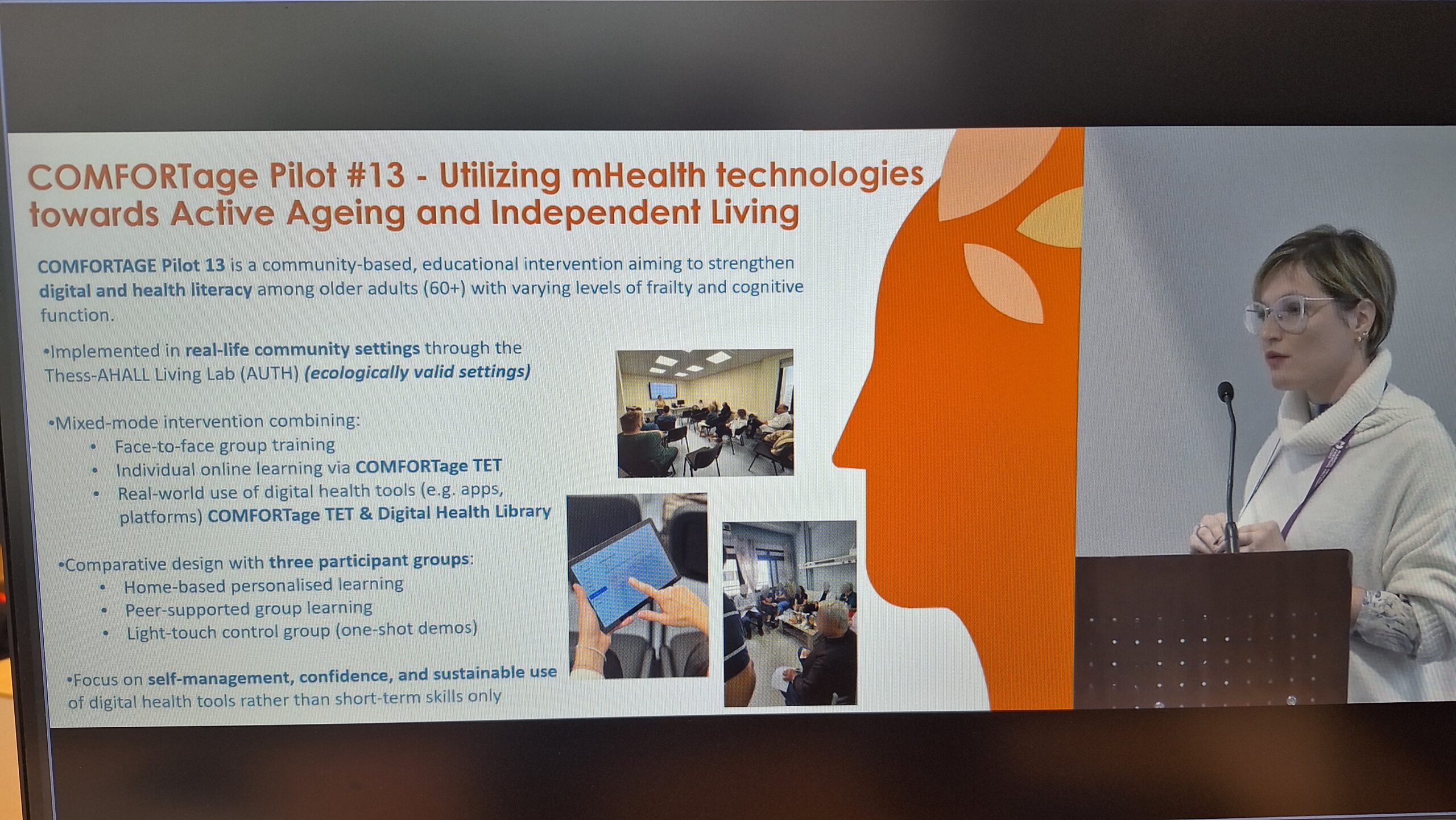
The final round table showcased use-cases from regional ecosystems and COMFORTage pilots, highlighting practical pathways for adaptation and transfer. Participants stressed the importance of peer-learning networks, communities of practice and twinning initiatives to accelerate knowledge exchange and reduce fragmentation across regions.
The session concluded with reflections on upcoming joint activities, underlining that the future of health systems depends not only on innovation, but on the ability to align people, skills, technology and governance around users’ real lives. Scaling integrated, user-centred care means investing in interprofessional capabilities and collaborative ecosystems—so that transformation becomes systemic, equitable and sustainable across Europe.