
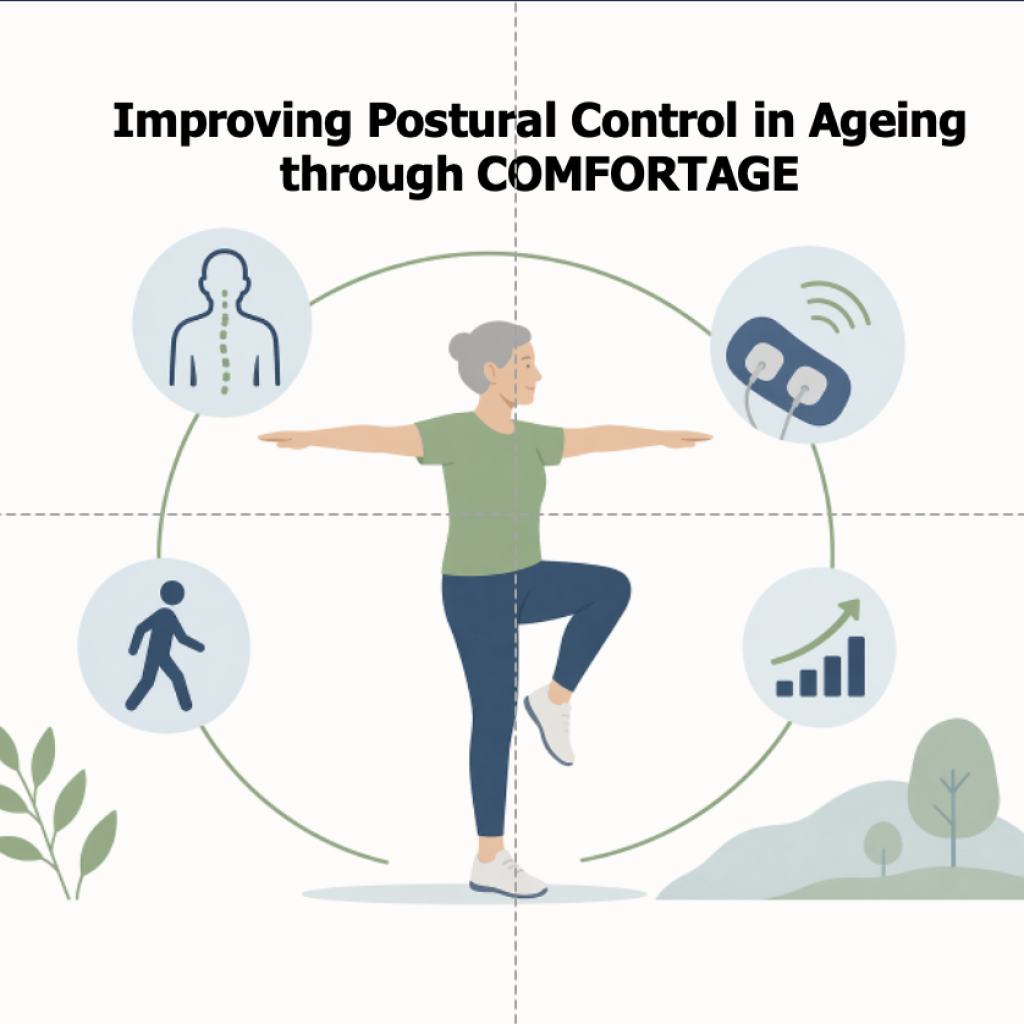
One of the key goals of COMFORTage is to support healthier ageing through better prevention and management of age-related conditions, including frailty and cognitive decline. Within this broader framework, our team contributes by studying postural control in ageing and the factors that influence mobility, balance, and functional independence.
Ageing is often associated with declines in postural stability and walking ability. These changes can reduce daily activity, increase the risk of falls, and negatively affect quality of life. Our work focuses on whether exercise, with or without Transcutaneous Electrical Nerve Stimulation (TENS), can improve postural control, walking performance, and force steadiness in middle-aged and older adults.
The study is based on the idea that effective movement depends not only on muscle strength, but also on how sensory information is processed and integrated. In particular, proprioceptive input plays an important role in maintaining balance and controlling movement. TENS is a non-invasive method that may enhance this sensory input and, in turn, improve motor performance. To examine these effects, participants complete a four-week intervention with specific strengthening exercises targeting lower-limb muscle groups, while some participants also receive TENS during training. We then assess changes in postural control, walking ability, manual dexterity, and force steadiness using a wide set of functional and laboratory-based tests.
Our contribution to COMFORTage is therefore both scientific and applied. By generating evidence on how exercise and TENS affect postural control in ageing, we hope to support the development of accessible, personalized interventions that help older adults remain active and healthy.
**Article written by Amistim Medical Equipment, a key partner in the COMFORTage project.