Rethinking Prevention in Ageing Societies
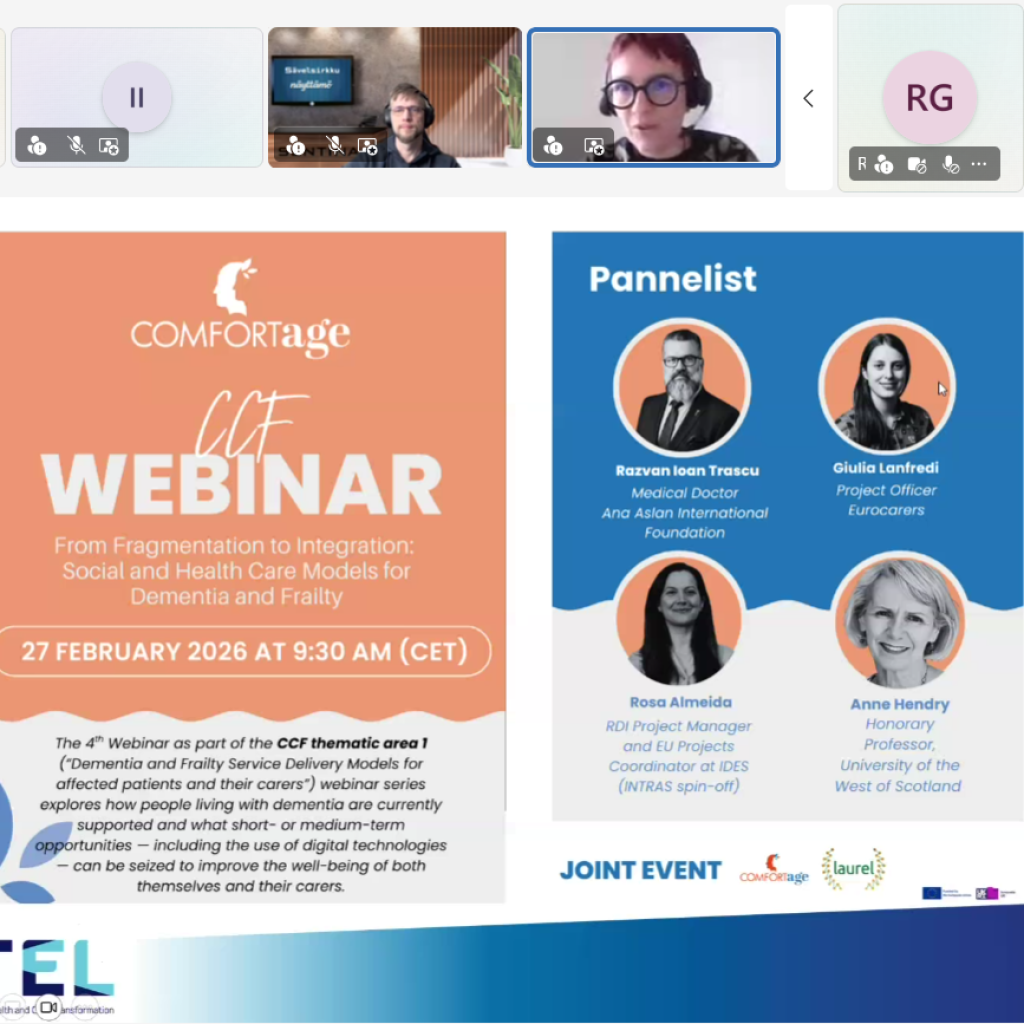
The fourth COMFORTage CCF webinar into the 1st Thematic Area lead my EHTEL and held jointly with the Laurel Project, focused on one urgent challenge: how to move from fragmented health and social care systems towards truly integrated, person-centred ecosystems for people living with dementia and frailty.
With growing pressure on national healthcare systems across Europe, speakers highlighted the need to shift our perspective on prevention. It is no longer enough to increase resources. Instead, we must design multi-actor strategies that connect healthcare providers, social services, municipalities, researchers, caregivers and digital innovators. Data, when used responsibly, can help identify risks earlier, personalise interventions and improve long-term sustainability.
Research, Innovation and Multi-Level Strategies
Marco Albertini (University of Bologna) presented the AGE-IT project in Italy, funded through the Next Generation initiative. The project adopts a multi-layered approach to address demographic ageing, combining research, policy and community engagement.
Key actions include mapping long-term care risks and resources, monitoring caregiver wellbeing to prevent stress and depression, and providing training and digital support tools for formal and informal carers. The project also combines qualitative, psychological and statistical data to inform policymaking — even influencing areas such as urban design to improve walkability and inclusion.
Importantly, AGE-IT has created a national archive of caregivers’ biographies, based on interviews and socio-demographic data, reinforcing the importance of lived experience in shaping policy.
Cultural Context and the Nordic Model
Jodie Hillen (ARIIA, Australia) stressed the importance of cultural awareness and avoiding bias when designing care models. Integrated systems must reflect local realities and respect diverse communities.
Sirpa Irene Impinen (City of Helsinki) and Kari Mikkonen (Sentina Oy) presented the Nordic Care Model, which integrates physical, cognitive and social wellbeing into daily care routines. Their approach uses simple digital tools to structure personalised activities tailored to each individual’s strengths and interests.
Non-pharmacological interventions, such as music, were highlighted as powerful tools to reduce restlessness and enhance functional capacity. The overarching message was clear: digital solutions must enhance daily joy and human connection — not replace them.
From Data to Daily Life
The panel discussion reinforced three key ideas: act with urgency, use data to personalise interventions, and ensure tools are adaptable to individual circumstances.
Speakers from Eurocarers, IFIC, INTRAS and COMFORTage partners emphasised improving care quality, preventing unnecessary institutionalisation, and addressing the challenges of data integration and interoperability , particularly regarding informal and social care data.
A recurring theme emerged: technology only works when it strengthens relationships. Ethical data governance, co-creation, social learning approaches and Living Labs were identified as essential enablers of meaningful innovation.
Ultimately, integration is not simply about connecting systems. It is about connecting people and ensuring that every solution begins with their stories, needs and daily lives.